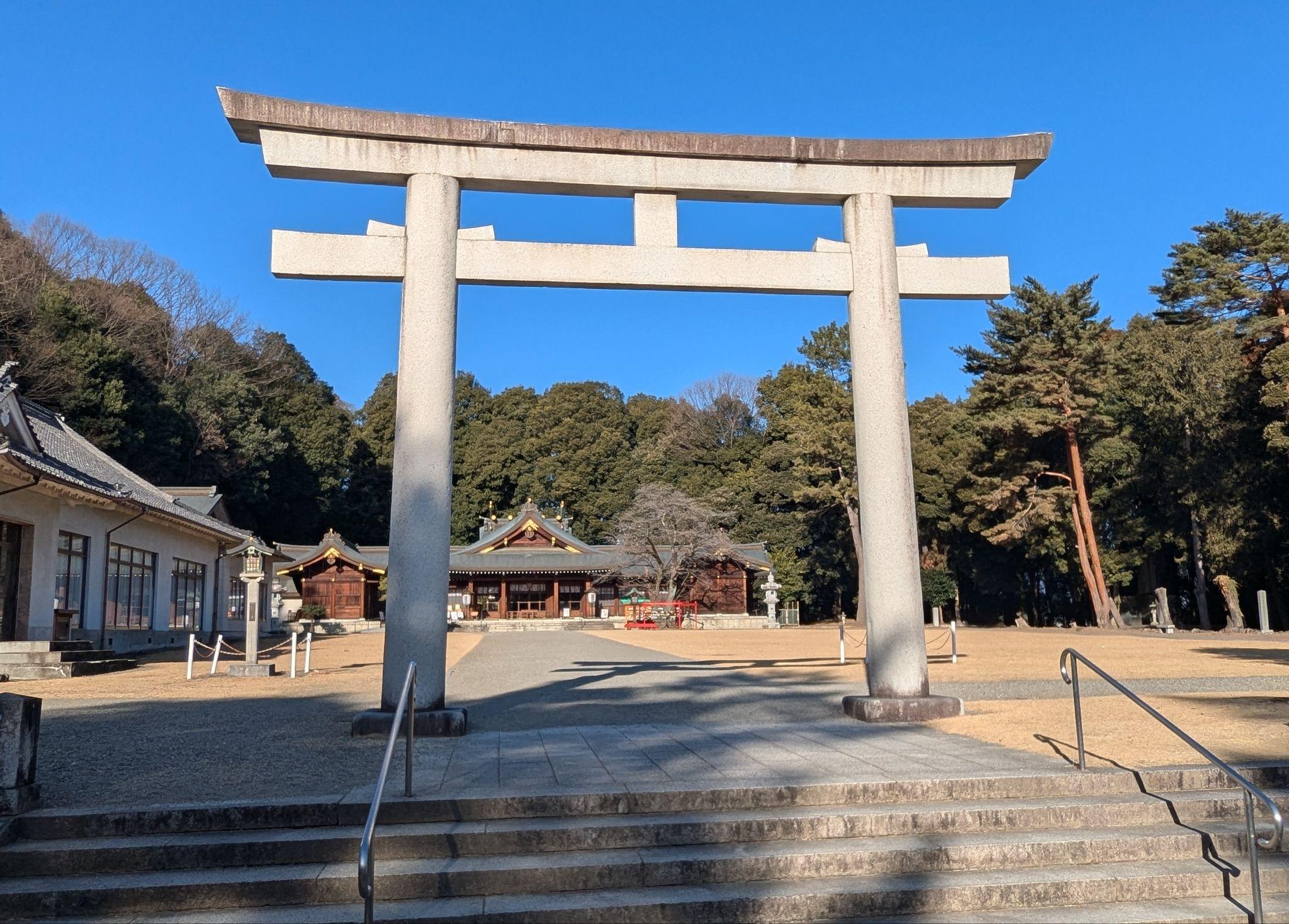
A torii gate leading into a Shinto shrine precinct.

Last updated: September 2026
As you travel through Japan, you may notice torii gates in city centers, quiet residential neighborhoods, and even deep in the mountains.
Beyond those gates, you’ll usually find a Shinto shrine.
Shrines are familiar, everyday places for most Japanese people, but for visitors from overseas, they can be hard to read at first. How are they different from churches? How are they different from Buddhist temples? Who exactly is being prayed to? And why are so many shrines found near mountains, rocks, waterfalls, and forests?
This guide covers the basic ideas behind Japanese shrines for first-time visitors. It isn’t meant as a complete academic account of Shinto — think of it more as a way to see shrines a little differently as you travel through Japan.
Shrines Are Closely Tied to Shinto
Shrines are places closely connected to Shinto, Japan’s native tradition of belief and practice.
Unlike Christianity or Buddhism, which trace back to a single historical founder, Shinto has no founder at all — and no single sacred text that lays out its teachings. Instead, it developed gradually, out of the way people in Japan came to understand nature, the land, their ancestors, and forces greater than themselves.
A shrine is where kami are enshrined, and where people come to offer prayer, gratitude, and respect.
"Kami" Isn’t Quite the Same as "God"
The Japanese word kami is often translated as "god" or "deity." But kami are a different kind of concept from the single, absolute God found in monotheistic religions.
In Shinto, mountains, seas, rivers, waterfalls, thunder, wind, fire, water, specific places, ancestors, and even historical figures have all been worshipped or revered as kami.
And which kami people pray to depends on the shrine.
One shrine might enshrine a kami associated with agriculture or a good harvest; another might be tied to learning, business, safe travel, or the protection of a particular community. Shrines aren’t all interchangeable places for praying to the same deity. Learning which kami a given shrine enshrines often tells you something about why the shrine exists there in the first place, and what the local community has valued.
For visitors used to monotheistic traditions, the many gods of Greek mythology might offer a slightly closer starting point for imagining the world of kami — though the comparison only goes so far. In Shinto, kami aren’t always imagined as human-like figures at all. Nature itself, or a powerful presence tied to a specific place, can be understood as something worthy of reverence in its own right.
Living With the Power of Nature
One simple way to approach Shinto is to think of it as a tradition built around sensing something like a personal presence within forces beyond human control, and trying to live in a good relationship with them.
Thunder can bring the rain crops need, but it can also harm. Rivers support daily life, but they can also flood. Mountains provide water and timber, while also confronting people with dangers no one can fully control.
People didn’t just fear these forces. They revered them, prayed to them, sought to calm their more destructive power, and hoped to receive their blessings in return. Rather than seeking to conquer nature completely, Shinto holds an important sensibility of living in balance with its power — a mindset that goes a long way toward understanding Japanese shrine culture.
Amaterasu Omikami
Among Shinto’s many kami, one of the best known is Amaterasu Omikami, closely associated with the sun and central to Japanese mythology.
Amaterasu is also regarded, in traditional mythology, as an ancestral deity of the Imperial Family, and is enshrined at Ise Jingu in Mie Prefecture — as well as at shrines throughout the rest of Japan.
Shinto includes an enormous number of kami, but for a first-time visitor, Amaterasu is one of the most useful names to know.
The Emperor and Shinto
The Emperor of Japan has a deep historical relationship with Shinto, and still performs traditional court rituals passed down over many generations.
Throughout Japanese history, the emperor hasn’t only been a political figure — he has also held a ritual role, offering prayers to the kami. That said, the emperor isn’t a "supreme priest" who directly governs every shrine in the country the way the Pope heads the Roman Catholic Church.
A useful way to think about it: the Emperor has historically held a special position within Japan’s Shinto ritual tradition, without functioning as its central religious authority.
Why Can Mountains and Rocks Be Sacred?

At some shrines, rocks, trees, mountains, and other natural features are inseparable from the sacred character of the place.
It’s easy to focus on a shrine’s buildings when you visit today. But in older forms of Japanese belief, buildings weren’t necessarily where the story started.
Mountains. Massive rocks. Waterfalls. Ancient trees. Deep forests. Islands. Natural features like these could be regarded as sacred in their own right — places where a kami dwells, where a kami descends, or simply natural forms carrying sacred meaning on their own. Even today, some shrines worship a mountain, rock, or other natural feature directly, rather than centering worship on a conventional main hall.
So when you visit a shrine, don’t look only at the buildings. Ask yourself: why was a shrine built here? There may be a mountain behind it, a massive rock nearby, a river or waterfall running through the area. That natural feature may be exactly why the place came to be considered sacred.
The Torii Marks a Boundary

A torii can stand at the threshold between everyday surroundings and sacred shrine space.
One of the first things you’ll usually see at a shrine is a torii gate — commonly understood as marking the boundary between ordinary space and sacred space. Beyond it lies ground associated with the kami.
That’s why some visitors bow lightly before passing through. It isn’t a rigid rule so much as a small gesture of respect: "I’m now entering a sacred place."
Haiden and Honden
Shrine buildings vary in style and layout; the worship hall and main sanctuary serve different roles.

At many shrines, you’ll come across two important terms: haiden and honden.
Haiden — the worship hall, where visitors typically stand to pray.
Honden — the main sanctuary, where the kami is enshrined. This is generally a more sacred, restricted space that ordinary visitors don’t enter.
Not every shrine follows this exact layout. Some preserve older forms of worship, where a mountain, rock, or other natural feature itself serves as the central object of reverence — with no honden at all.
What Do People Pray for at a Shrine?
People visit shrines in Japan for all kinds of reasons: health, safe travel, work, study, love and marriage, the birth of a child, business success, protection from misfortune.
But shrines aren’t only places to make wishes. People also visit to greet the kami at New Year, mark an important life event, or simply express gratitude. For some visitors, it’s less about asking for something and more about greeting the kami and taking a moment to reset.
Omamori, Omikuji, and Goshuin
Visiting a shrine also means encountering a few distinctive pieces of Japanese religious culture.
Omamori — protective amulets tied to specific wishes: health, safety, academic success, love, safe driving, and more.
Omikuji — paper fortunes with predictions and advice. Results range from daikichi (great blessing) and kichi (blessing) down to kyo (misfortune) — though reading the advice itself is as much the point as the result.
Goshuin — a hand-stamped seal and calligraphic inscription received as proof of a visit. Many are genuinely beautiful, and some people travel from shrine to shrine, and temple to temple, collecting them.
Omamori, omikuji, and goshuin are best understood as part of the culture of worship — not simply souvenirs.
Shrines and Temples Are Different — But the History Isn’t Simple
As a basic rule: shrines belong to Shinto, temples to Buddhism.
In practice, Japanese religious history gets harder to follow if you imagine the two as always having existed in complete separation. For centuries, Shinto and Buddhism influenced each other and coexisted closely — temples were built near shrines, and kami were worshipped within Buddhist settings. This long blending is known as shinbutsu-shugo.
This history is complex, so we won’t go deeply into it here. The short version worth remembering is simple: Shinto and Buddhism weren’t fully separate for most of Japanese history. Shrines and temples are institutionally distinct today, but at older religious sites you can still find traces of that long overlap.
Don’t Look Only at the Buildings
At a well-known shrine, the first instinct is usually to photograph the torii gate or the main buildings — and that’s part of the pleasure of visiting. But there’s something else worth looking at: the surroundings.
Why is the shrine here? What’s behind it — a mountain, a river, a rock, a forest, or a settlement people have lived in for centuries? A shrine doesn’t always end at the walls of its buildings; the land itself can be part of what the shrine means.
Once you notice that, a shrine stops being just an example of "Japanese architecture." You start to see a relationship between the people who’ve lived there, the land, and the history that connects them.
From a Place to See to a Place to Feel
Visiting a Japanese shrine for the first time doesn’t require memorizing every kami or every detail of Shinto history.
Walk through the torii and slow down for a moment. Listen for the trees, for water. Notice the age of the buildings, the rocks and mountains nearby, the people praying, the atmosphere of the place. Why have people protected this spot as something special for hundreds — sometimes over a thousand — years?
Just holding that question in mind can change how a shrine looks and feels.
A shrine isn’t only a religious site. It can also preserve something larger: the relationship between people and nature, between people and place, between the past and the present.
Next time you travel through Japan, try visiting a shrine not just as a tourist attraction, but as a sacred place belonging to that particular land.
Author’s Note
This guide is intended as a general introduction to Shinto shrines for first-time visitors. It focuses on practical understanding rather than exhaustive religious history.
Japanese travel notes: More firsthand shrine visits and original Japanese-language articles are available on note.