Last updated: September 2026
Tokyo, Kyoto, Mount Fuji, Hakone, Nikko. For travelers visiting Japan, these are the names that tend to come up.
Gunma Prefecture usually isn’t one of them.
Within Japan, Gunma is well known for its mountains and hot springs. Beyond Japan, it’s still fairly unfamiliar. But Gunma has mountains, hot spring towns, small rural communities, and shrines deeply tied to the land around them — and it isn’t especially far from Tokyo, either.
This is a place suited less to travelers checking famous sights off a list, and more to travelers who want to move through rural Japan at their own pace.
It’s also why this site covers so many shrines in Gunma. Here, mountains, towns, hot springs, and religious culture all sit within close reach of one another.
Where Is Gunma?
Gunma is an inland prefecture northwest of Tokyo, in northern Kanto. Along with Tochigi and Ibaraki, it is one of the three prefectures commonly grouped together as North Kanto.
From Tokyo, the Shinkansen gets you to Takasaki quickly. But Gunma’s appeal isn’t concentrated in one city. Mountains, hot spring towns, shrines, small communities, and natural scenery are scattered across the prefecture.
Because of that, Gunma works better as a region to move through than a single city to see.
Start With the Mountains
Travel through Gunma and you notice how close the mountains are. Drive through a town and you can see them in the distance. Head a little farther and you’re already on a mountain road. Hot spring towns sit near mountains. Shrines have mountains rising behind them.
In Gunma, the mountains aren’t just scenery — they sit behind the roads, the towns, the hot springs, the culture, and the religious traditions that have shaped the region.
The clearest symbol of this is a trio known as the Jomo Sanzan: Mount Akagi, Mount Haruna, and Mount Myogi.
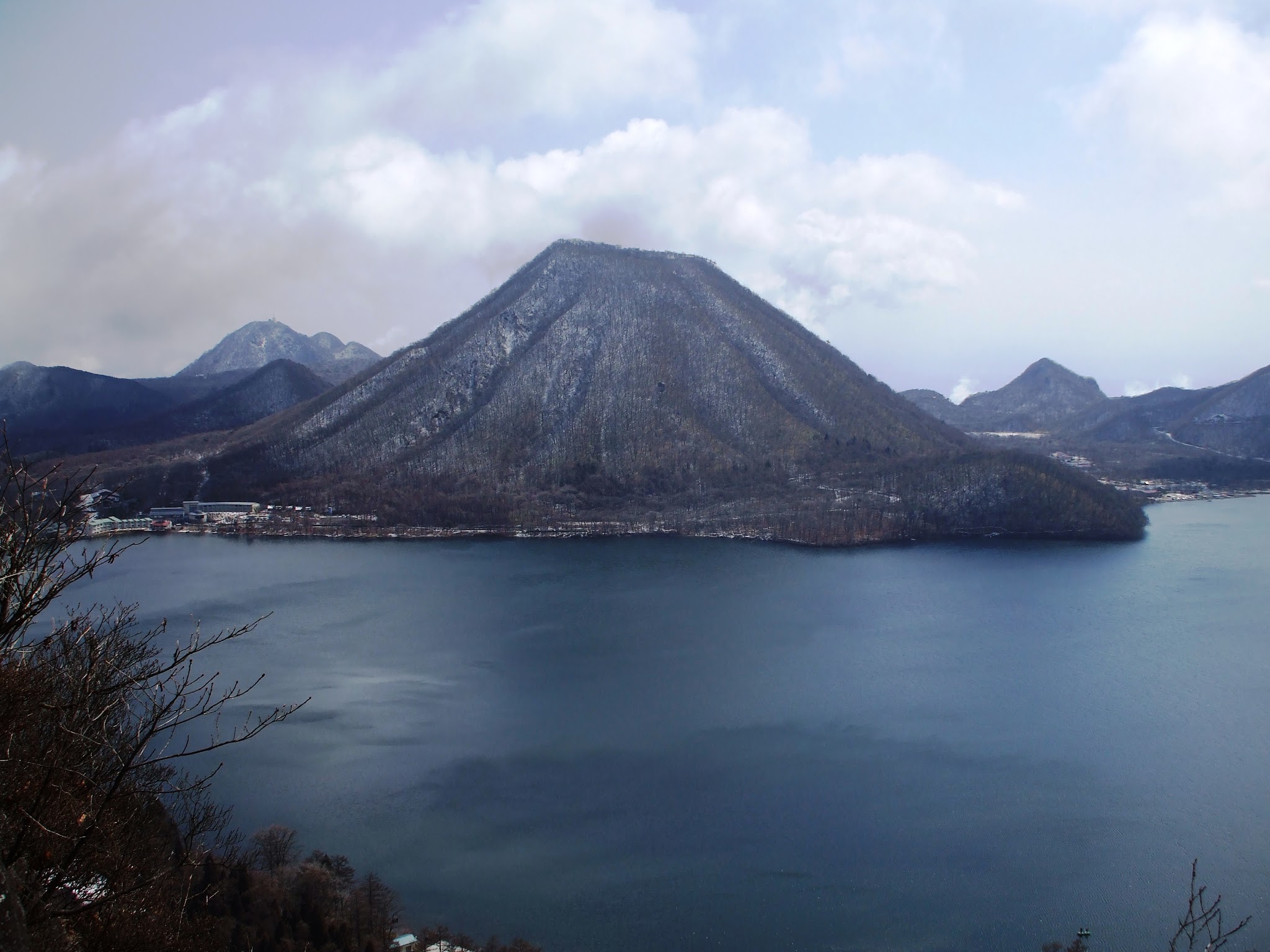
These three mountains have long been cherished as symbols of Gunma, and each has a distinct character. Mount Akagi has a broad, expansive form. Mount Haruna is known for its lake and forest. Mount Myogi is defined by sharp rock spires and unusual rock formations.
Part of the appeal of traveling through Gunma is feeling how different each mountain’s character is, even within the same prefecture — and how those landscapes have shaped more than scenery alone.

Mount Harunafuji and Lake Haruna. Photo: Mass Ave 975 / Wikimedia Commons, CC BY-SA 3.0.
Why Mountains and Shrines Are So Close Together in Gunma
This is the biggest reason this site covers so many of Gunma’s shrines.
In Gunma, it’s common to find shrines deeply tied to mountains, rocks, forests, waterfalls, hot springs, and long stone staircases — places where you can sense why a shrine exists where it does, rather than seeing it only as a building.
The presence of the mountain itself. Rock and waterfall. An approach path winding through forest. A stone staircase rising from a hot spring town. These features of the land aren’t separate from the shrine — they shape the entire experience of visiting.
Visiting a shrine in Gunma often means seeing the land itself, not just the shrine.
The Hot Springs Belong to the Same Landscape
Gunma is also home to some of Japan’s best-known hot spring towns, including Kusatsu Onsen, Ikaho Onsen, Shima Onsen, and the Minakami area.
This site doesn’t aim to cover hot springs in detail — that’s not the point here. What matters is this: Gunma’s hot springs grew out of the same mountainous terrain and natural environment as its shrines.
A hot spring town, a mountain road, a shrine — these aren’t separate attractions functioning in isolation. Nature, daily life, belief, and tourism overlap within the same stretch of land. That closeness is part of what makes traveling through Gunma interesting.

Yubatake in Kusatsu Onsen, one of Gunma’s best-known hot spring landscapes. Photo: Σ64 / Wikimedia Commons, CC BY 4.0.
A Different Japan Than Tokyo or Kyoto
Gunma’s appeal isn’t in large landmarks alone. It’s also in things like a quiet approach path, a mountain road, a local train line, farmland, old stone retaining walls, a small town, or a roadside rest stop — a michi-no-eki.
This isn’t a "next stop, next stop" kind of trip in the way a city itinerary can be. In Gunma, the scenery between destinations becomes part of the trip itself, offering a view of rural, everyday Japan that’s harder to notice at more famous sights.

The stone steps of Ikaho Onsen, where a hot spring town, slope, and local religious landscape meet. Photo: Qurren / Wikimedia Commons, CC BY-SA 4.0.
Gunma Works Especially Well by Car
If you want to explore Gunma broadly, a rental car makes a real difference. Some shrines and hot spring towns sit some distance from the nearest station.
With a car, you can combine a shrine, a mountain, a hot spring, a town, and a roadside rest stop into a single day — heading from Takasaki toward Haruna, Myogi, Ikaho, or farther into the mountains depending on your route.
For travelers comfortable driving in Japan, Gunma is well suited to a road trip. In winter, though, pay attention to snow and icy roads in mountain areas.
Getting Around Without a Car
A car isn’t required to enjoy Gunma. Takasaki is a rail hub with Shinkansen and local-line access, and major hot spring towns are reachable by bus.
That said, visiting several rural shrines or mountain areas in one trip may mean combining trains, buses, and taxis. If you’re relying on public transit, it’s worth not overpacking your schedule. Travel time itself can be part of the day here, and Gunma is better suited to seeing one place unhurried than several places quickly.
You Don’t Have to Make It All About Shrines
This site focuses on shrines. But in Gunma, a trip built around shrines alone may not be the most interesting way to experience the region.
Stopping at a shrine on the way to a hot spring. Driving with the mountains in view. Taking a break at a roadside rest stop. Eating at a local restaurant. Walking through a town, and then visiting its shrine.
Experiencing a shrine as part of that larger flow makes it easier to understand why belief has continued in that particular place. A shrine is a destination in its own right, but it’s also an entry point into the region around it.
Practical Notes for Foreign Visitors
• From Tokyo: Shinkansen service to Takasaki is fast and convenient.
• Getting around: A rental car is the most practical way to cover the prefecture broadly.
• Cash: Bring some — small shops and shrines in rural areas may not accept cards.
• Footwear: Walking shoes are worth packing for mountain shrines and long stone staircases.
• English: Major sights may have English information, while rural areas are often more Japanese-language focused.
• Winter driving: Check road conditions and winter equipment before heading into mountain areas.
• Pace: Don’t plan this like a city itinerary — build in more time than you’d expect.
Best Time to Visit
Spring–early summer — Fresh greenery and comfortable conditions for walking around mountain shrines.
Summer — Deep green scenery, though mountain areas can still get warm. Bring water.
Autumn — Fall foliage pairs especially well with shrine visits and hot springs, making this one of the most popular seasons to visit Gunma.
Winter — A rewarding season for hot springs, but snow and icy roads require more planning.
Gunma’s Appeal Lives in the In-Between
Rural Japan sometimes gets described, even by Japanese people, as having "nothing there." No skyscrapers. No massive entertainment districts. No dense concentration of famous sights.
In that sense, Gunma really isn’t a flashy destination. But it has mountains. Hot springs. Shrines. Small towns. And in between all of it: farmland, mountain roads, rivers.
Gunma’s appeal isn’t concentrated in one giant attraction. It’s a shrine at the end of a mountain road. A hot spring town tucked into a valley. A stone staircase disappearing into the trees. A mountain visible in the distance as you drive toward your next stop.
It’s a place you get to know gradually, by moving through it.
Final Thoughts
Tokyo and Kyoto are excellent places to get a first sense of Japan. But they’re not the whole picture.
Step a little farther out, and you’ll find shrines at the foot of mountains, hot spring towns, small communities, and the everyday life of the people who live there.
Gunma works well as an entry point into a more rural side of Japan — especially for travelers curious about how nature, belief, and local life have shaped one another over time.
Gunma’s appeal isn’t centered on one famous building or one must-see attraction. It’s in the mountains, the shrines, the towns, the hot springs, and everything in between — gradually discovered as you move through the region.
Author’s Note
This site is a travel guide centered on Shinto shrines, exploring Japan’s land, belief, and travel culture through them.
Shrines around Gunma and the greater Kanto region are covered based on firsthand visits, alongside the natural surroundings, history, and culture connected to each site.
Gunma features prominently on this site because its mountains, hot springs, rural towns, and shrines sit in such close proximity — making it an unusually clear place to experience Japan’s regional religious culture as an actual landscape, not just an idea.
This guide is meant as an entry point to the land itself, before visiting the individual shrines covered elsewhere on this site.
Image Credits
Mount Harunafuji and Lake Haruna — Mass Ave 975, Wikimedia Commons, CC BY-SA 3.0.
Kusatsu Yubatake — Σ64, Wikimedia Commons, CC BY 4.0.
Ikaho Onsen Stone Steps — Qurren, Wikimedia Commons, CC BY-SA 4.0.
Japanese travel notes: More firsthand shrine visits and original Japanese-language articles are available on note.